

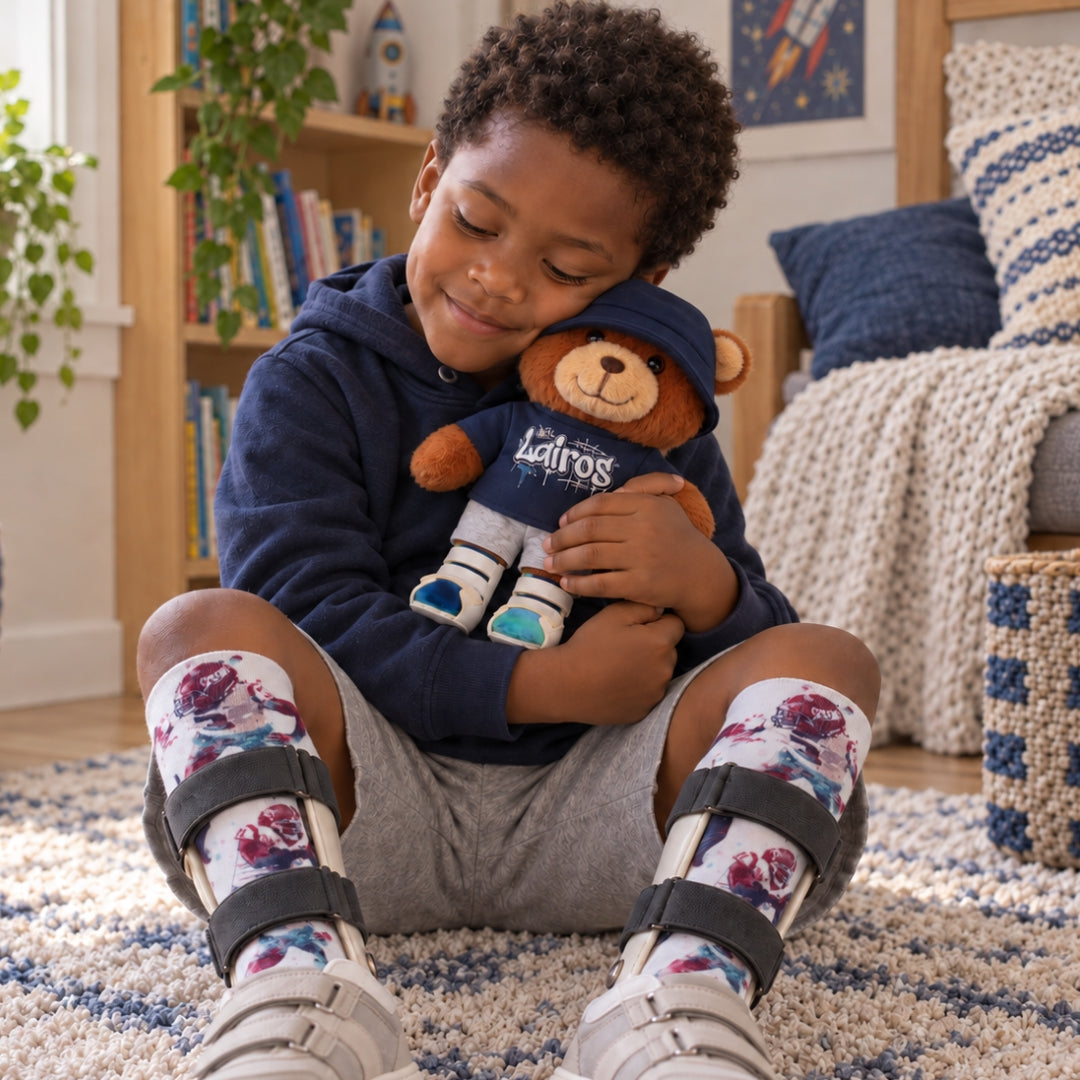
When exploring comfort objects for children, parents often realize they are witnessing something powerful. If you have ever watched your child clutch a favorite blanket before a doctor's appointment, you know exactly how it feels. For families navigating the world of AFO braces, mornings can sometimes feel rushed or stressful. During these transitions, a child’s favorite toy isn’t just a plaything - it’s an emotional anchor.
Understanding the psychology behind these toys can help us see them not as distractions, but as valuable tools for everyday routines.
The Science of Transitional Objects
In developmental psychology, these cherished items are formally known as transitional objects. First described by pediatricians and psychoanalysts, these items help kids transition from a state of dependence to independence.
When a child is faced with something unfamiliar - like a new medical environment or the physical sensation of wearing braces - these objects provide a tangible sense of security. According to the American Academy of Pediatrics, relying on a familiar item is a healthy, normal part of child development and can be particularly helpful during routine changes.
Why the Right Toy Makes a Difference
While any soft item can serve as one of these transitional objects, a toy that reflects a child's own experience adds an extra layer of support.
When a child, especially in the toddler AFO stage, relies on a plush friend during a morning dressing routine, they are looking for familiarity. If that toy also wears braces, it provides silent validation. It bridges the gap between seeking emotional comfort and finding representation.
Designed for Comfort and Connection
Drawing from our own family’s experience, we wanted to offer a plush friend that provides both physical softness and specific familiarity. That is why we created the Lairos Bear.
This cuddly companion features:
- A Huggable 30 cm Size: The perfect size for a child to hold tightly in a waiting room or carry during morning routines.
- Removable Soft Felt Brace Accessories: Designed with real Velcro straps, these toy accessories let your child see their own experience reflected in their favorite toy.
- A Complete Outfit: Including a removable hat, T-shirt, shorts, and miniature printed socks, providing a relatable dressing experience.
Note: The Lairos Bear is a toy intended for children ages 3 and up. It has been tested by a CPSC-accepted third-party laboratory for applicable U.S. toy safety requirements, including ASTM F963. It is not a medical or therapeutic device, but a comforting friend for everyday play.
How to Integrate a Comfort Object into Your Routine
If you are looking to ease the friction of daily routines, here are three ways to utilize comfort objects for children:
1. Bring it to the Clinic: Let the toy "go first." Whether it is a measurement appointment or a new shoe fitting, having the orthotist interact with the plush friend first can make the process feel less intimidating.
2. Use it for Emotional Regulation: During the morning rush, allow your child to hold their bear. The physical act of hugging a soft object can help calm their nervous system.
3. Keep it Consistent: Allow the toy to act as a predictable transitional object during the routine.
Pretend play can also become part of a familiar AFO daily routine, especially when children can practice the same steps on a toy.
Key Takeaways
- Healthy Development: Transitional objects are research-backed tools that help kids navigate stress and new environments.
- Double Benefit: A plush companion with AFO-style accessories offers both physical comfort and important visual representation.
- A Gentle Tool: Incorporating the Lairos Bear into dressing routines can help turn a stressful moment into a shared, manageable experience.
A soft toy cannot change a medical diagnosis or fix an ill-fitting brace, but it can absolutely change how a child feels in the moment. Sometimes, a familiar friend is all it takes to make a tough routine feel a little bit easier.
Explore the Lairos Bear and give your child a comforting companion for their daily routine.


