

Do truly seamless socks exist? The term “seamless” can describe different constructions, so check how the toe area is finished. A sock marketed as seamless may still have a flat toe join.
For children with sensory sensitivities, comfort involves more than the toe seam. Fit, fabric texture, cuff pressure, and loose internal threads can also matter. This guide explains what to check when comparing seamless socks, flat seam socks, and different heel designs.

Do truly seamless socks exist?
When comparing truly seamless socks, check the toe construction and heel shape separately. A heel-free design does not automatically mean there is no toe seam. For sensory friendly socks, inspect the inside and consider how each feature feels to your child.
1. Tube Socks: Check the Toe and Heel Separately
Tube socks do not have a shaped heel pocket. The term describes the heel design, not how the toe is closed. Check the product details and inside toe area before assuming a tube sock is seamless. Some children prefer this design; others prefer a defined heel. Fit depends on the individual sock, its size, and the child wearing it.
2. Hand-Linked Toes: A Flat Toe Join
Hand-linked toes join the knitted loops at the toe to create a flat finish. These socks are often marketed as seamless because the join has little bulk. However, a flat join does not guarantee that every child will find it comfortable. Check the inside toe area, including its edges, and ask how it feels when worn.
3. Flat Seam Socks: What to Check
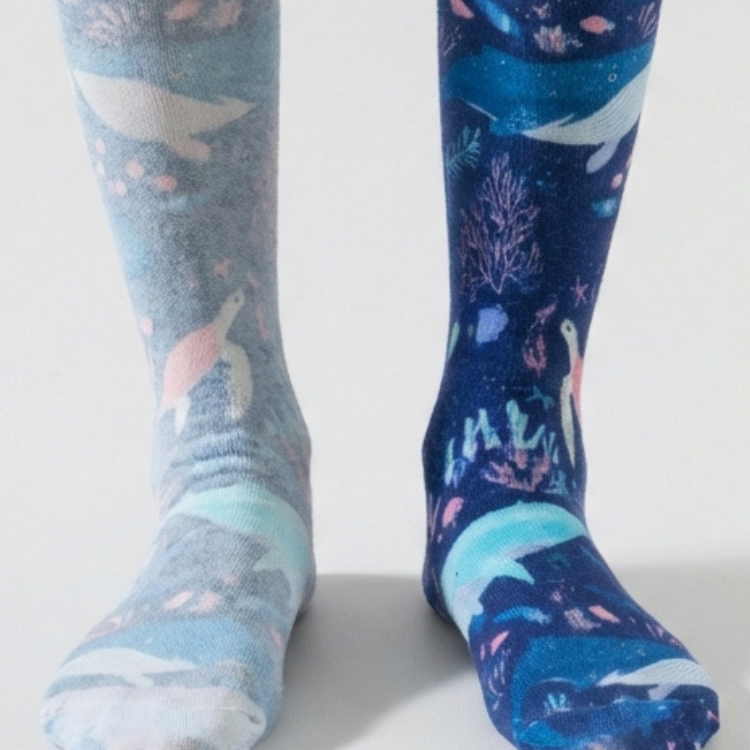
Lairos flat seam socks bring together three practical features: a minimal toe seam, a defined heel, and colorful printed designs. The toe seam keeps the join low-profile. The shaped heel gives you a clear guide for positioning the sock around the foot. Printed patterns add personality without adding loose decorative yarns inside.
Together, these features give families more to consider than a “seamless” label alone. Children can choose a print they love, while parents can check the fit and inner construction.
Lairos socks have a minimal toe seam rather than a completely seamless construction.
Tube Socks vs. Defined Heels: Comfort Beyond the Toe Seam
A seamless toe can be appealing when a child dislikes seams. But if the sock slips or gathers around the ankle, removing the toe seam does not solve that problem. How the whole sock fits matters, especially inside an AFO.
Lairos uses a defined heel to give the sock a shaped fit around the foot. The heel pocket provides a clear placement point during dressing, making it easier to check that the sock is positioned correctly. This is a practical reason to consider a shaped sock alongside its toe finish.
Choose the appropriate size, align the heel pocket, and smooth the fabric before fastening the brace. Follow your orthotist’s fitting guidance for your child’s AFO.
Check the Size and Heel Position
A defined heel makes sock placement easier to check: the heel pocket should line up with your child’s heel. Use the manufacturer’s size chart to choose a size, then pull the sock on gently and smooth the fabric around the foot and ankle. If the heel pocket sits too high or excess fabric gathers, recheck the size and positioning. For children who wear AFOs, check the fit with their prescribed brace and shoes.
Beyond the Toe Seam: Check for Internal Threads
When choosing sensory friendly socks, check the whole inner surface, not just the toe seam. Some patterned knits have loose yarn strands inside, often called floats. These carry yarn between areas of the pattern.
Their length and texture vary with the knitting method and design. Some children notice these strands; others do not. Turn the sock inside out and feel for loops, raised areas, or threads that might bother your child.

A plain sock can still have noticeable seams or an uncomfortable texture. Likewise, a patterned sock is not automatically rough inside. Compare the actual inner surfaces rather than judging comfort by color or appearance alone.
How Lairos Adds Patterns Without Internal Pattern Threads
Lairos uses printed designs rather than knitting the patterns with extra colored yarns. This means the print does not add loose decorative threads inside the sock.

With Lairos, colorful designs come from printing, so there are no loose decorative yarns inside to create the pattern. For children who notice internal threads, this is a useful feature to look for when comparing flat seam socks. Children can choose a design they love, while parents can check the toe finish, fit, and interior.
Choosing Truly Seamless Socks: A Practical Checklist
When shopping for truly seamless socks, look beyond the label. Check these details when comparing pairs:
- Toe finish: Feel the join and its edges for noticeable bulk.
- Fit: Check the size, heel position, and any folds around the toes or ankle.
- Inner surface: Look for loose pattern threads or raised areas your child may notice.
- Cuff and fabric: Ask how the texture and cuff feel during wear.
Choosing sensory friendly socks starts with the details your child notices most. Lairos brings together a minimal toe seam, a defined heel, and colorful prints without loose internal pattern yarns. These features give families a practical option that combines thoughtful construction with designs children can make their own.
Explore our Lairos sock collection to compare sizes and printed designs.


