

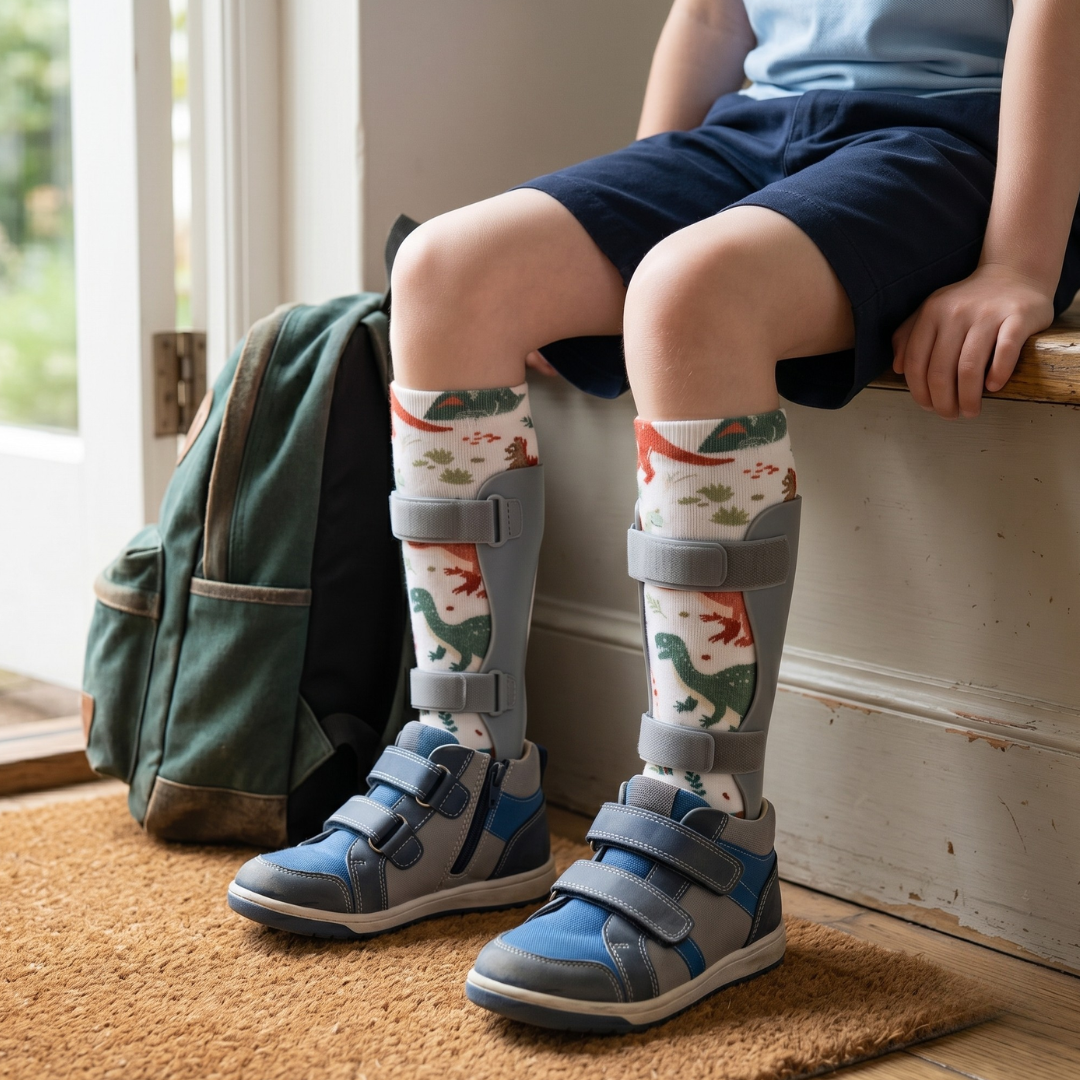
AFO socks are the most critical comfort solution for children and adults who wear braces. Finding the right gear can be a challenge. Ankle Foot Orthosis (AFO) braces provide crucial support. However, without the right protection, they can lead to discomfort. They can also cause sweating and friction.
Many people are initially introduced to standard "tube socks." But there is a better way. There is a growing movement towards anatomically designed, cotton-rich socks. These offer better stability. They also improve skin health. In this guide, we will explore exactly what these socks are. We will also see why material matters and how to choose the perfect pair
What are AFO socks?
AFO socks are specialized garments designed to be worn underneath Ankle Foot Orthosis braces. They are significantly longer than regular socks, allowing them to fold over the top of the brace to help protect the skin from rigid plastic edges.
High-quality options feature breathable materials and minimal flat seams to help reduce irritation. Finally, they must have a snug fit to help ensure the fabric does not wrinkle or bunch up inside the brace.
Why Material Matters: The "Synthetic Tube" vs. Premium Cotton
One of the biggest misconceptions in the orthotic world is that socks must be 100% synthetic to wick moisture. Many standard AFO socks (often called "tube socks") are made almost entirely from polyester or nylon. While durable, these synthetic fibers can feel artificial and "plastic-like" against sensitive skin.
The Cotton Advantage: We believe in a different approach. Premium AFO socks are crafted from a 90% Cotton blend.
- Breathability: Cotton is a natural fiber. It allows air to circulate. This keeps the foot cool and reduces the "swampy" feeling inside a plastic brace.
- Skin Health: This is important for children with sensitive skin or eczema. Soft, breathable cotton is often recommended as a gentler alternative to synthetic materials to help reduce the risk of irritation and contact dermatitis.
- Elasticity: We blend in 10% high-quality Spandex. These socks achieve extreme stretch. They fit a wide range of sizes while maintaining the soft feel of cotton.
The "Seamless" Myth: Tube Socks vs. Anatomical Fit
You will often hear the term "seamless" associated with tube socks. While tube socks technically lack a heel seam, this design creates a functional problem: instability.
The Problem with Tubes: Because a tube sock has no heel, it relies solely on tightness to stay up. This often leads to the sock sliding down or bunching up at the ankle joint, creating painful pressure points under the brace.
The Anatomical Solution: The best AFO socks utilize a Defined Heel and Minimal Flat-Seam Technology.
- Defined Heel: Keeps the sock anchored in place so it doesn't rotate or slide down.
- Flat Seams: A barely-there, ultra-flat seam at the toe allows for a shaped fit without the bulk, offering the best of both worlds: the comfort of a seamless feel with the stability of a real sock.
Patterned Socks & Sensory Issues: The "No-Thread" Advantage
For many children, the medical look of plain white or beige socks adds to the stigma of wearing a brace. They want fun, colorful designs! However, traditional patterned socks (Jacquard knitting) are a nightmare for sensory-sensitive kids because the designs are created by knitting different colored threads together, leaving a mess of loose loops inside the sock that tickle and scratch.

The Game Changer: 360° Sublimation Printing Modern AFO socks use advanced sublimation technology. This means the vibrant, crazy designs are ink-fused directly into the fabric fibers.
- Zero Internal Threads: Turn the sock inside out, and it is completely white and smooth against the skin.
- Vibrant & Durable: The colors are sharp, fun, and won't fade, making the medical device feel like a fashion statement.
- Sensory Friendly: Kids get the "cool factor" without the sensory irritation.
Do you wear a brace over or under a sock?
You should always wear the brace over the sock. The correct order is:
- Apply the Sock: Pull the elastic cotton sock up the leg. Ensure the defined heel is sitting correctly on the foot to lock it in place.
- Smooth it Out: Pull the sock all the way up (even over the knee if needed) to remove any wrinkles.
- Apply the Brace: Place the AFO over the sock and fasten the straps.
- Fold Over: If the sock is longer than the brace, fold the top cuff over the brace edge for extra security.
Do you have to wear socks with AFOs?
Yes. Wearing an AFO directly against bare skin is strongly advised against. The hard plastic of the brace does not absorb sweat, which can increase friction. A quality sock acts as a necessary protective barrier, helping manage moisture and reduce the risk of blisters and skin breakdown.
What are the best socks for kids with AFO braces
The "best" sock is one that prioritizes physical comfort first, ensuring the child is pain-free, while also helping with compliance. Look for these key features in this order of importance:
- Anatomical Fit: This is crucial. Ensure the sock has a defined heel to anchor it in place, helping prevent the fabric from slipping and bunching up inside the brace (which can cause friction and blisters).
- Cotton-Rich Fabric: 90% cotton is excellent for breathability and sensitive skin, helping manage moisture and providing a gentler feel compared to fully synthetic tubes.
- High Elasticity: The sock should be highly stretchable to make putting it on easy for parents and comfortable for the child, without being too tight or constricting.
- Ink-Fused Designs: Finally, look for fun designs to boost confidence, but insist on sublimation printing. This ensures there are no loose threads inside (common in woven patterns) that could irritate the skin.
Expert Tip:
When choosing socks, remember that fun matters. If a child loves the design of their socks, the daily battle of putting on their brace becomes a little bit easier.
Explore our collection of sensory-friendly, cotton AFO socks here.


