

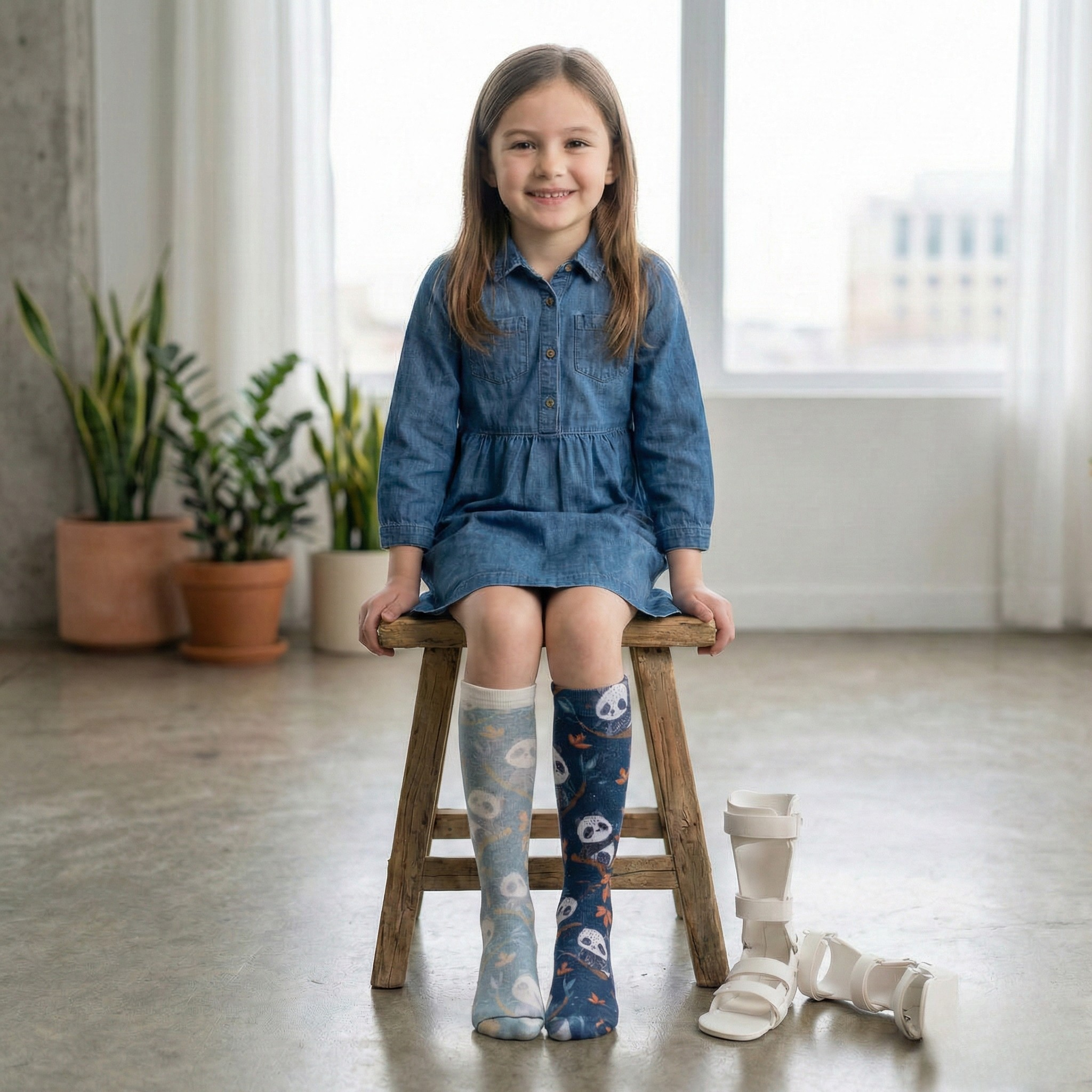
When your child begins wearing AFOs, much of the initial attention naturally goes to the brace itself: how it fits, how it works with their shoes, and when it should be worn.
But skin checks quickly become an important part of the daily routine too.
Because an AFO fits closely around the foot, ankle, and lower leg, it may create areas of pressure, warmth, or rubbing. A consistent routine of keeping the brace clean, checking the skin, and noticing changes early can help families identify possible fit concerns before they become more serious.
This article provides general information for parents and caregivers. It does not replace the instructions provided by your child’s orthotist or healthcare team.
Our Story: The Red Marks That Lasted for Hours
The photos in this article are real images of our son Ariel’s legs from the years when he wore AFO braces.
After a long day at kindergarten, we would sometimes remove his braces and find deep red marks around his ankles and lower legs. Some of those marks took hours to fade.

At the time, we did not fully understand which marks could be expected from a close-fitting brace and which ones should be reviewed by an orthotist.
Mild, temporary redness may appear where an AFO applies pressure. However, redness that remains longer than the timeframe recommended by your child’s orthotist, or redness accompanied by pain, blisters, broken skin, or increased rubbing, should not be ignored.
Why Skin Checks Matter When Wearing AFOs
The skin beneath an AFO may be affected by several factors working together.
Pressure
An AFO is designed to fit closely and provide support around specific parts of the foot, ankle, and leg.
This close fit may leave mild, temporary marks, especially while a child is gradually becoming accustomed to a new brace. However, persistent redness, pain, or skin damage may indicate that the brace needs to be reviewed.
Rubbing and Movement
Rubbing may occur when the foot moves inside the brace or when the sock does not remain smooth.
This may happen when:
- The heel is not positioned fully inside the AFO.
- The straps are not fastened as instructed.
- The sock has folded or bunched.
- The brace has become too small.
- The child’s body, walking pattern, or activity level has changed.
A sock can provide a layer between the skin and the brace, but it cannot correct an AFO that no longer fits properly.
Heat and Moisture
The enclosed space inside a brace and shoe can become warm, especially during active days or hot weather.
When skin remains damp for a prolonged period, it may become overhydrated and more vulnerable to irritation from pressure and rubbing. This moisture-related change is often described as skin maceration.
Pressure-related skin injuries are complex and are not caused by one factor alone. Sustained pressure may damage the skin, while friction and moisture can contribute to the problem. For general background on these injuries, read the Johns Hopkins Medicine guide to pressure injuries and pressure sores.
The Johns Hopkins resource provides general medical information and is not specific to children who wear AFOs. Questions about your child’s skin or brace fit should always be directed to their orthotist or healthcare professional.
A 4-Step Daily AFO Skin Care Routine
Step 1: Keep the Brace Clean and Dry
Follow the cleaning instructions provided by your child’s orthotist or the brace manufacturer.
Many plastic AFOs can be cleaned with a damp cloth or sponge and mild, soapy water. The brace should be completely dry before it is worn again.
Avoid placing the AFO near a radiator, hair dryer, or other source of direct heat, since high temperatures may damage or change the shape of the plastic.
Check the brace regularly for:
- Cracks or rough areas.
- Worn padding.
- Loose straps.
- Damaged Velcro.
- Dirt or debris inside the brace.
- Changes that may affect how it fits.
Do not cut, reshape, pad, or modify the AFO yourself. Contact the orthotist when an adjustment or repair may be needed.
Step 2: Make Sure the Skin and Socks Are Dry
Before putting on the socks and braces, check that your child’s feet and legs are clean and dry.
After bathing, gently dry the skin, paying attention to areas where moisture may remain, such as between the toes and behind the knee.
Avoid putting a damp sock inside the brace.
During particularly warm or active days, check whether the sock has become very damp and follow the advice provided by your child’s orthotist.
Step 3: Check the Skin Regularly
Check your child’s skin whenever the AFO is removed.
Skin checks are especially important:
- When the brace is new.
- During the gradual break-in period.
- After a long or active day.
- During hot weather.
- Following a growth spurt.
- When the child reports new discomfort.
- When the brace suddenly feels more difficult to put on.
Look for:
- Red marks that do not fade as expected.
- Blisters.
- Sores or broken skin.
- Swelling.
- Areas that feel unusually warm.
- New pain or tenderness.
- Increased rubbing.
- Changes in skin color.
- Changes in the way your child walks or responds to wearing the brace.
Follow the specific timeframe provided by your child’s orthotist for how quickly mild redness should fade.
If redness persists beyond that timeframe, the skin breaks, or your child experiences pain, blistering, or increased rubbing, remove the brace and contact the orthotist or healthcare team for advice before continuing normal wear.
Step 4: Ask Before Using Creams, Powders, or Extra Padding
Skin products are not one-size-fits-all.
Before applying creams, lotions, powders, dressings, bandages, or extra padding beneath an AFO, ask your child’s orthotist or healthcare professional.
Adding material beneath a closely fitted brace may alter the fit or create additional areas of pressure.
If your child has dry, irritated, or broken skin, ask the healthcare team which products are appropriate and when they should be applied.
The Role of the Sock Under an AFO
A sock creates a layer between the skin and the brace.
An AFO sock should:
- Extend above every part of the brace that may touch the skin.
- Sit smoothly without folds or bunching.
- Fit comfortably without creating excessive pressure.
- Have minimal, low-profile seams.
- Remain in position as the child moves.
- Feel comfortable against the skin.
- Avoid adding unnecessary bulk inside the brace.
The right sock may help reduce direct rubbing and make the brace-wearing experience feel more comfortable. It remains one part of the complete routine, alongside correct brace fit, proper positioning, regular skin checks, and professional follow-up.
Why We Chose a Cotton-Rich, Stretchable Blend
Lairos AFO socks are made from 90% cotton and 10% spandex.
The cotton-rich fabric was chosen for its soft feel and breathability. The spandex adds flexibility and helps the sock adapt to the shape of the foot and leg.
This flexibility can also help the sock remain smoother and reduce the chance of slipping or bunching inside the brace.
For a deeper explanation of the material choice, read our guide to cotton-spandex AFO socks for children who wear braces.
Lairos printed socks use dye-sublimation printing. The design is applied directly to the fabric rather than created with additional decorative yarns.
This means the printed designs do not add loose internal pattern threads or floats inside the sock.
The socks also feature minimal, low-profile construction seams. While designed to maximize comfort, they are not completely seamless.
No sock can correct a brace that no longer fits properly or is causing persistent pressure. New pain, lasting redness, blisters, or skin damage should always be discussed with the child’s orthotist.
From Skin Checks to Everyday Comfort
A practical AFO skin care routine does not need to be complicated.
Remember three simple steps:
Clean. Dry. Check.
Keep the brace clean and dry, make sure the skin and socks are dry before dressing, and check the skin regularly for changes.
The right sock can provide comfortable coverage and may help reduce bunching and rubbing, but it is only one part of supporting a comfortable brace-wearing routine.
When something does not look or feel right, contact your child’s orthotist rather than attempting to modify the brace yourself.
Looking for Socks Designed for AFOs?
Explore the Lairos collection of AFO socks, designed with knee-high coverage, a soft cotton-rich blend, high stretch, minimal flat seams, and printed designs without loose internal pattern threads.


