

As a parent of a child with AFOs, finding the right AFO socks can feel secondary to the big picture: the appointments, the therapies, and the milestone victories. It’s easy to dismiss socks as a minor detail. But here is the simple truth: the right socks can make a meaningful difference in daily comfort and routine.
When it comes to AFOs, socks are the single most important layer between your child’s sensitive skin and the hard shell of the brace. An ill-fitting or poorly designed sock can lead to discomfort, irritation, sensory frustration, and daily dressing struggles.
So, why do socks matter for AFOs more than you might think? We’ve broken it down into four key reasons.
Beyond Blisters: The Critical Role of Skin Health
A child’s skin is delicate. When you add the constant pressure and friction of a rigid brace, that skin becomes incredibly vulnerable. The primary job of good AFO socks isn't style; it's protection. Standard socks, often made with bulky seams and materials that retain moisture, can quickly become abrasive and increase the risk of skin breakdown.
The Sensory Connection: Why Seams Aren't Small
For many children, and especially for those with sensory processing sensitivities, a tiny seam can feel like a mountain. This is where sensory-friendly socks truly shine. By eliminating that ridge of thread, a sock with minimal flat seams may help reduce one common source of sensory discomfort during dressing.

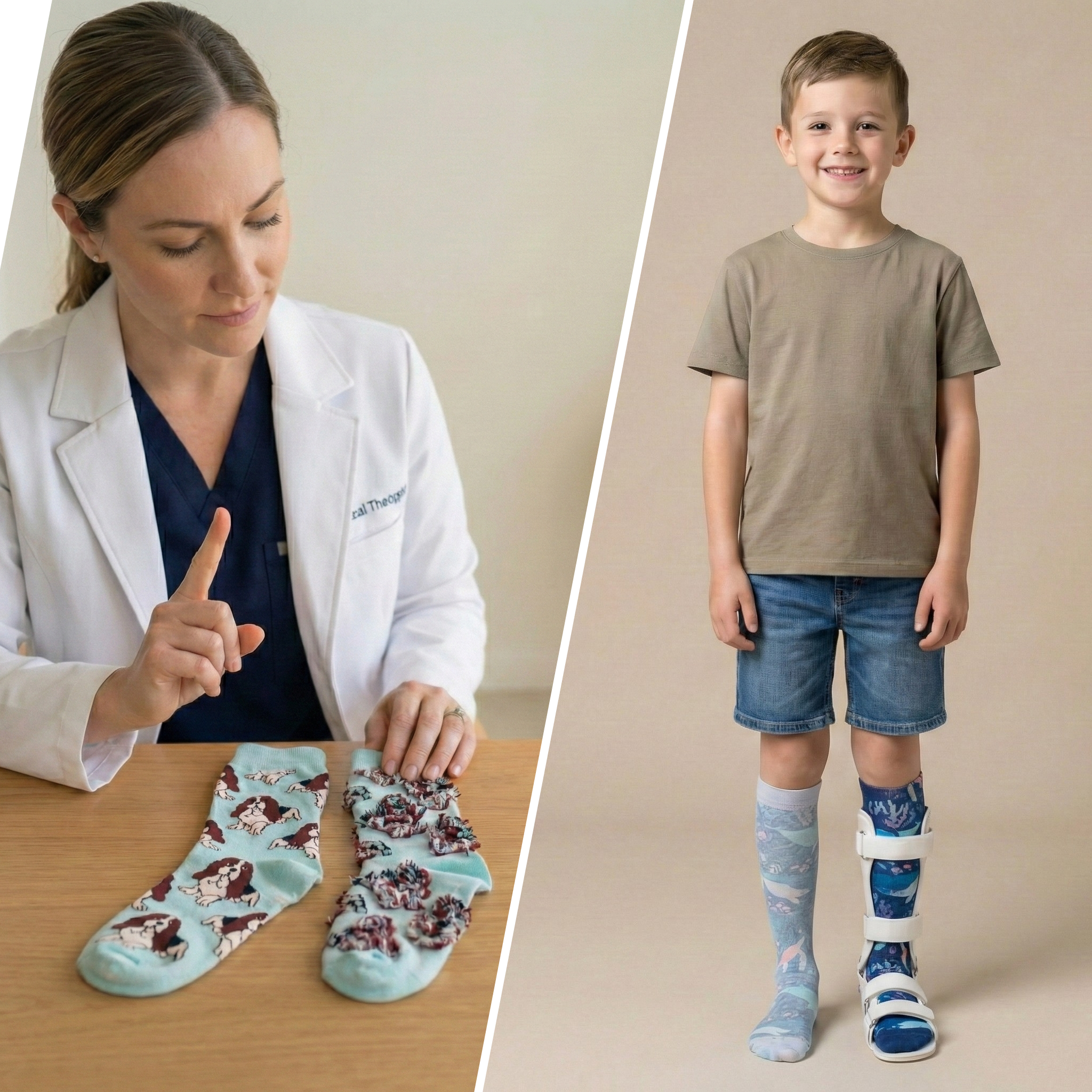
Why the difference?
Most patterned socks are made using the Jacquard method, which weaves the design directly into the sock. This process is what creates all those rough, loose internal threads you see on the left - a major source of irritation for sensitive skin.
At Lairos, we use a different method called dye-sublimation. The design is heat-pressed and fused into the fabric, not woven. The result is a vibrant design with a smooth interior with no loose decorative threads or floats, as you see on the right. No loose internal threads, and less potential for bunching or sensory discomfort from the print itself.
The Confidence Effect: From Medical Device to Personal Style
Braces can make a child feel "different." The AFO socks that peek out over the top of the brace are a powerful tool for self-expression. When a child can choose a fun pattern, it shifts the narrative. It can give children more room for self-expression and help support confidence.
The Ripple Effect: How AFO Socks Impact Adherence
This final point connects everything: Comfort equals adherence. The braces can only work if the child is wearing them. We saw this in fragments during our own journey: a fun, patterned sock (with terrible internal seams) made Ariel excited to get dressed, while a plain, functional sock was physically comfortable but lacked joy. We realized the true "ripple effect" could only happen if one product solved both problems at once. By helping address sensory, physical, and emotional friction points - a single great sock turns the entire daily routine into a positive, empowering experience.
Beyond the Seams: Why Fit, Stretch, and Height Matter
While a smooth, thread-free interior is the first thing you'll notice, the overall construction of AFO sock is just as critical for AFO wearers. The wrong fit can create problems just as painful as a bad seam.
Proper Height: AFO socks must be tall enough to fold comfortably over the top of the brace. This isn't just for looks; it creates a soft buffer designed to help keep the hard edge of the brace from rubbing directly against your child's skin.
Dynamic Stretch: Look for a high-quality blend with Spandex. This helps the sock stretch and adapt more comfortably to the leg and brace, while reducing the chance of bunching. Bunching can create pressure points and discomfort under a brace, and AFO sock that stays put is essential.
Durability: Let's be honest—AFOs are tough on fabric. The constant friction can wear holes in regular socks in days. A well-constructed AFO sock uses durable yarns designed to withstand that daily friction, ensuring they last.
So, when you look at that small sock, remember it's a complete comfort system.
From the smooth, thread-free interior to the dynamic stretch and protective height, every element is designed to work with the brace, not against it. It helps reduce friction and can make the sensory experience feel easier for some children, and gives your child the confidence to choose their own style.
It truly isn't just a sock. It’s the foundation of their comfort, a supportive layer for their skin, and a key to their confidence.
Ready to see the difference? Explore our collection of smooth, thread-free, sensory-friendly AFO socks .


