

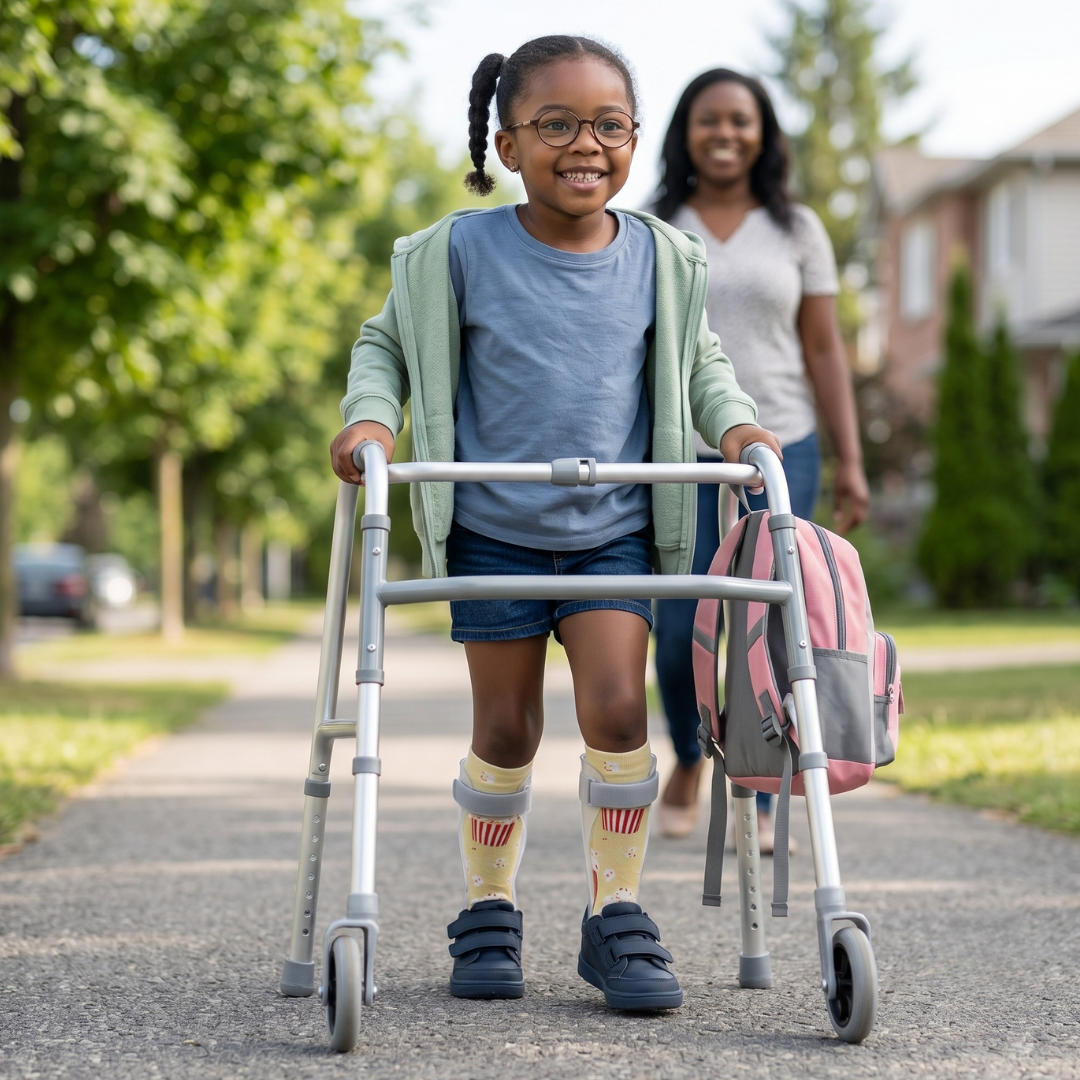
For many children, wearing AFO braces can feel like a spotlight on what makes them "different." Building kids confidence with AFOs isn't just about the hardware; it's an emotional experience. We learned this firsthand.
Our son Ariel's experience with braces was complex. We realized that "Why am I different?" isn't a question a child asks just once. It comes up again and again. Based on our story, here are the core strategies we learned for turning that challenge into a point of pride. This guide outlines the powerful strategies we used to empower our child.
Strategy 1: The Power of Language (The "Glasses" Metaphor)
Children's questions deserve honest, empathetic answers. When Ariel was young, friends would ask about his braces. The comments were innocent, but they left a mark.
With the guidance of a child psychologist, we learned to use simple comparisons. The most helpful was comparing braces to glasses.
We explained: "Just as glasses help eyes see better, braces help legs get stronger." This analogy made sense to him. It also gave us a powerful, positive way to frame the braces for his peers.
Strategy 2: The Power of Choice
While the braces weren't optional, we discovered that socks could offer a form of control. We found cool, patterned men's socks that Ariel was excited to choose each morning. This solved the emotional problem. But it created a new one: they were the wrong size, and the Jacquard seams were a sensory nightmare.
We realized the market was completely divided. Parents had to choose: a functional (but boring) sock, or a fun (but uncomfortable, and sometimes even painful) sock. The Lairos mission is to unite these two worlds. We are dedicated to being the brand that proves you never have to choose between functional, sensory-friendly design and the joyful, empowering art your child deserves.
Parent Tip: The Power of Limited Choice
It is crucial to consider how you offer choices. An open-ended question like, "Which sock do you want to pick from the whole drawer?" can be overwhelming, especially for young children (generally ages 2-6). This is similar to asking, "What do you want for dinner?" the endless options can lead to confusion or frustration.
Instead, offer a choice within a limited framework. Ask: "Do you want the dinosaur socks or the space socks today?" Providing 2-3 options creates a safe space that gives the child a sense of control and autonomy. Child development experts from the Harvard Center on the Developing Child suggest that managing choices is a key part of building executive functions and preventing overwhelm.

Why Choice Works (The Psychology Behind It)
This experience isn't just a feeling; it connects to established ideas in psychology. Research often refers to "enclothed cognition" - the idea that what we wear can influence our confidence and behavior. For kids, this effect can be even stronger.
This small act of choice creates a powerful "ripple effect." In fact, a core principle of psychology's "Self-Determination Theory"suggests that when children feel a sense of control (autonomy), it can help boost their intrinsic motivation and overall well-being. That small choice in the morning radiates outward, reframing their entire day.
Summary: Two Core Strategies for Empowering Your Child
Braces may be medical, but confidence is emotional. As we have seen, the two core strategies for empowering your child are simple yet powerful:
- Use Positive Language: Reframe the braces using simple analogies (like "glasses for the legs").
- Offer Choice: Provide a daily choice (even a limited choice of 2-3 pairs of socks) to give them back a sense of control.
At Lairos, we finally built the tools that make this choice possible- socks that are both functional and fun.
Explore the collection designed to start that ripple effect.


